How Lee Gardens Generated $81K in Direct Bookings with Una AI
What happens to hotel revenue when a guest wants to book at 11 PM, but the front desk is busy or operating with limited staff?
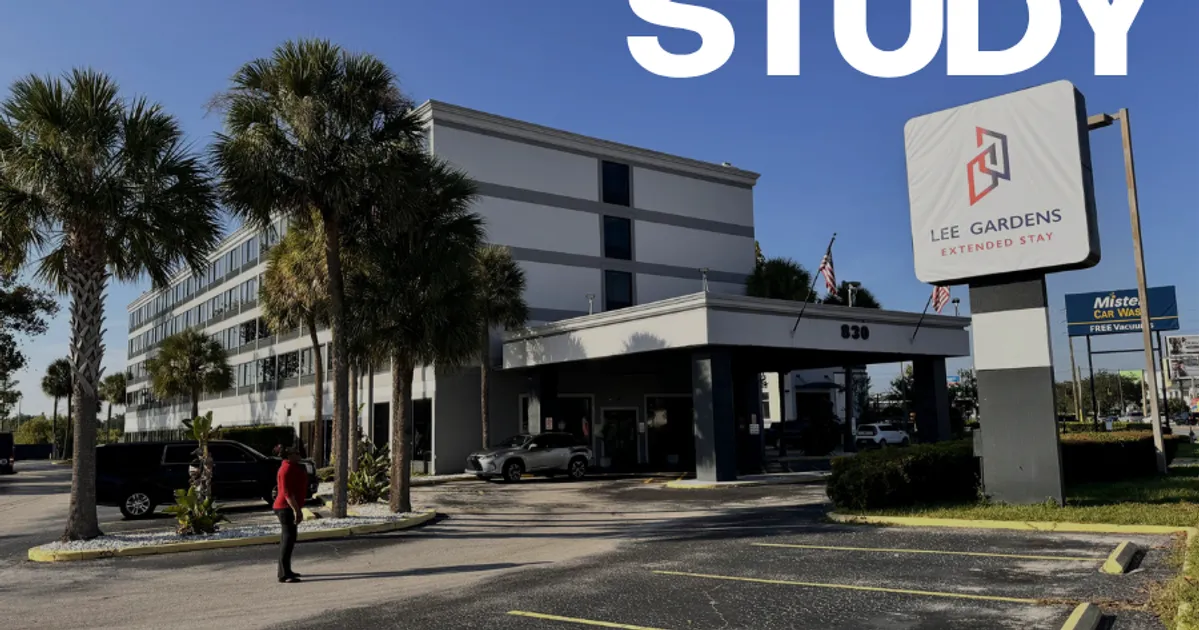
At Lee Gardens Extended Stay in Orlando, Florida, that question became a measurable business opportunity.
Over a ten-month reporting period, the hotel used Una by Polydom, a voice-first AI Digital Employee, to handle guest communication, complete direct reservations, and coordinate operational requests across multiple channels.
The results:
- $80,968 in direct booking revenue generated through 232 reservations made by Una.
- 4,104 guest conversations handled, including 2,475 phone calls.
- 98.05% of conversations handled without human intervention, with only 80 requiring staff involvement.
- 172 operational tasks generated for hotel employees.
These are reported results from one hotel deployment, not projections or industry averages.
For hospitality operators evaluating AI receptionists or hotel booking automation, the Lee Gardens case offers a practical example of what happens when guest communication connects directly to revenue-generating and operational workflows.
Property Snapshot: Lee Gardens Extended Stay
- Hotel: Lee Gardens Extended Stay
- Location: Orlando, Florida, USA
- Property type: Extended-stay hotel
- Stay pattern: Primarily weekly and monthly reservations
- Quiet hours: 10:00 PM–8:00 AM
- Reporting period: 10 months
- AI solution: Una by Polydom
- Guest touchpoints: Phone, website widget, WhatsApp, and kiosk mode
Extended-stay hotels face a different communication rhythm from properties built primarily around one- or two-night visits.
Potential guests may ask about weekly rates, extended availability, reservation changes, or specific accommodation needs before deciding to book.
At the same time, hotel teams still need to handle arrivals, departures, operational issues, and requests from current guests.
For Lee Gardens, these competing demands created three connected challenges: missed booking opportunities, fragmented guest communication, and excessive manual coordination.
The Customer Perspective: What Changed After Una
The clearest explanation of the problem comes directly from the hotel's experience.
Before introducing Una, Lee Gardens hadn't fully recognized how many potential guests were trying to book late at night or early in the morning.
Once Una began handling guest communication around the clock, the hotel gained a way to respond to that demand without requiring employees to participate in every routine interaction.
In its published testimonial, Lee Gardens described the shift as a transformation of operations, with staff becoming involved primarily when decisions were needed.
The feedback highlights an important operational blind spot.
When an inquiry goes unanswered, the hotel may never know whether the caller was asking a simple question or was ready to make a reservation.
For a property offering weekly and monthly stays, missed booking opportunities can represent meaningful potential revenue.
Lee Gardens needed a way to remain responsive without requiring employees to be available for every routine conversation.
Challenge 1: Booking Demand Doesn't Follow Front Desk Hours
Hotel reservations don't happen exclusively during business hours.
Travelers research accommodations after work, compare properties late at night, and call whenever they are ready to make a decision.
For Lee Gardens, limited staff availability during busy periods and overnight hours made it difficult to respond immediately to every inquiry.
The commercial problem wasn't simply unanswered calls.
It was the possibility of losing a direct reservation because the hotel couldn't engage the guest at the moment of booking intent.
How Una Supported Direct Reservations
Una was introduced to handle incoming guest communication around the clock and support the hotel's direct booking process.
Rather than functioning only as an automated answering service, Una could participate in reservation workflows and complete supported bookings.
During the ten-month reporting period, Una independently made 232 direct reservations, generating $80,968 in reported booking revenue.
The original deployment report also recorded an average weekly stay rate of approximately $349.
This matters for two reasons.
First, the bookings were made directly rather than through an online travel agency, avoiding OTA commissions on those reservations.
Second, the reservations were processed through an AI Digital Employee rather than requiring a human employee to handle each booking conversation.
The $80,968 figure represents reported revenue from Una's direct reservations. It should not be interpreted as incremental revenue proven to have been lost without Una, or as net profit after operating costs.
Nevertheless, it establishes a concrete commercial result: AI-powered hotel booking automation can move beyond answering questions to completing real reservations.
Challenge 2: Too Many Communication Channels, Too Much Manual Coordination
Before implementing Una, Lee Gardens faced another familiar hospitality problem.
Guest inquiries arrived across different channels, including phone calls, WhatsApp, and the hotel website.
Employees needed to monitor conversations, interpret requests, provide information, and coordinate the actions that followed.
The challenge wasn't simply having multiple channels.
It was that every channel could become another source of manual work for an already busy team.
A question about accommodation might turn into a reservation.
A request for additional amenities might require staff coordination.
An issue raised during a phone conversation might need to be passed to someone working elsewhere on the property.
Without a consistent process, employees risk spending significant time transferring information rather than completing the underlying work.
One AI Digital Employee Across Guest Touchpoints
Lee Gardens deployed Una across its guest communication environment, including:
- Phone communication through a dedicated number.
- Website interactions through voice and text.
- WhatsApp messaging.
- Kiosk-mode guest interactions.
WhatsApp escalation and task management connections supported the hotel's communication and operational processes.
Over ten months, Una handled 4,104 guest conversations, including 2,475 phone calls.
This volume illustrates that the deployment was not limited to a small experimental chatbot or a single communication channel.
Una became part of the property's routine guest-facing operations.
For the hotel's employees, that meant routine communication could be handled without requiring someone to initiate every conversation or manually relay every request.
Challenge 3: Guest Requests Need Action, Not Just Answers
Hospitality communication doesn't end when a guest receives a response.
If someone needs a room prepared for a family, requests help with a maintenance issue, or asks for an accommodation adjustment, the hotel still needs to complete the work.
Before Una, Lee Gardens relied on employees to interpret these requests and assign tasks manually.
That created opportunities for delays, inconsistent handoffs, and unnecessary front desk workload.
From Guest Conversations to Staff Tasks
Una was configured to help turn guest requests into structured operational tasks.
For example, a conversation about accommodation for guests with children could result in a task for employees to prepare the appropriate room.
During the reporting period, Una generated 172 personalized staff tasks.
This is an important distinction between a basic AI receptionist and an execution-focused AI Digital Employee.
A receptionist-style tool may answer an inquiry or record a message.
An operational AI employee can help connect that interaction to the next step in the hotel's workflow.
At Lee Gardens, Una supported that coordination through connected task management processes.
Human employees remained responsible for the physical work and situations requiring judgment.
The reported task count demonstrates operational activity, although it does not independently establish how many labor hours were saved or whether every task was completed successfully.
The Results: 98.05% of Guest Conversations Without Human Intervention
One of the most significant findings from the Lee Gardens deployment was the relatively small proportion of conversations requiring human involvement.
Across 4,104 guest conversations, 80 cases required human interaction.
That represents approximately 1.95% of the total.
Conversely, approximately 98.05% did not require human intervention.
The distinction matters.
This is a conversation-level automation measure, not proof that 98% of all hotel operations or housekeeping tasks were automated.
It also does not mean that human employees were unnecessary.
The hotel team continued to manage situations requiring decisions, exceptions, and physical service delivery.
What changed was how often employees needed to participate in routine communication.
Lee Gardens: Ten-Month Performance Summary
Over the ten-month reporting period, Lee Gardens recorded the following results:
- 4,104 guest conversations handled by Una.
- 2,475 phone calls handled.
- 80 conversations requiring human interaction.
- 98.05% of conversations handled without human intervention.
- 232 direct reservations made by Una.
- $80,968 in direct booking revenue generated through those reservations.
- 172 personalized operational tasks generated for hotel employees.
Source: Polydom's published Lee Gardens Extended Stay deployment results. These figures describe one hotel's experience and are not guaranteed outcomes for other properties.
Together, these numbers show three distinct types of value.
Revenue capture: Una completed direct reservations instead of limiting her role to providing booking information.
Operating capacity: Thousands of guest conversations were handled without requiring employees to participate in each one.
Operational coordination: Guest requests could become structured tasks for the appropriate hotel staff.
These outcomes are related, but they should not be combined into a single claim about ROI or labor savings without additional supporting data.
Why This Matters for Independent and Extended-Stay Hotels
Lee Gardens is a useful case because its challenges are recognizable well beyond one Orlando property.
Independent hotels, extended-stay operators, serviced apartments, and smaller hotel groups often face similar constraints.
Their teams must remain responsive across multiple channels while managing reservations, guest requests, and property operations.
Yet expanding service coverage traditionally requires either additional staff availability or a greater workload for existing employees.
AI Digital Employees offer another operating model.
Instead of treating every incoming request as work that must begin with a human employee, the operator can define which workflows AI is authorized to handle and which situations require escalation.
For extended-stay properties, this can be particularly relevant to direct booking inquiries, recurring guest questions, reservation changes, and after-hours communication.
The economic value will vary by property. Booking volume, staffing structure, existing conversion rates, channel mix, and operational integrations all affect results.
But the Lee Gardens deployment demonstrates that an AI Digital Employee can participate in real hotel operations rather than remaining a standalone guest-facing chatbot.
For another example of AI supporting after-hours capacity, see How Helge Capital Used Una Across a 200+ Unit Serviced Apartment Portfolio.
How Una Works Within Existing Hotel Operations
Una by Polydom is a voice-first AI Digital Employee for hospitality.
Unlike a conventional FAQ chatbot, Una is designed to connect guest communication with supported operational workflows.
Depending on the property's integrations, permissions, and configured policies, Una can help with:
- Guest communication across supported voice and messaging channels.
- Availability and reservation inquiries.
- Creating and modifying reservations.
- Direct booking workflows.
- Structured task creation and operational routing.
- Escalation to employees when human judgment is required.
Una's role is not to replace the hotel's existing property management system or the people responsible for guest relationships.
She works within the operator's technology environment, carrying out authorized steps and passing exceptions to the team.
That operating model is central to the results seen at Lee Gardens.
The value did not come from adding another communication interface alone. It came from connecting incoming demand with actual booking and operational activity.
Frequently Asked Questions
Can AI Make Direct Hotel Reservations Without a Human Agent?
Yes, when the AI solution is connected to systems that support reservation execution and is configured with the necessary permissions and property rules.
At Lee Gardens Extended Stay, Una independently made 232 direct reservations over ten months, generating $80,968 in reported booking revenue.
The specific booking actions available depend on the operator's integrations and configuration.
What Does 98% Automation Mean in This Hotel Case Study?
It means that approximately 98.05% of the 4,104 guest conversations handled by Una did not require human interaction.
It does not mean that 98% of housekeeping, maintenance, or all hotel operations were automated.
Can AI Handle Hotel Guest Calls Overnight?
Yes. An AI receptionist or AI Digital Employee can provide continuous call coverage, depending on the deployment.
At Lee Gardens, the customer specifically identified late-night and early-morning booking demand as an important discovery after Una was introduced.
Does an AI Digital Employee Replace Hotel Front Desk Staff?
Not necessarily. At Lee Gardens, human employees remained involved when decisions were needed and were responsible for work requiring physical action or professional judgment.
Una handled routine communication and supported defined booking and task coordination workflows.
How Is an AI Digital Employee Different From a Hotel Chatbot?
A hotel chatbot primarily provides information through conversation.
An AI Digital Employee can also use supported integrations to carry out authorized actions, such as creating reservations or generating operational tasks.
The scope of those actions depends on the technology stack, configuration, and operating policies.
The Takeaway: Revenue, Capacity, and Execution
The most important lesson from Lee Gardens isn't that AI can answer thousands of questions.
It's that guest communication can produce measurable operational outcomes when it is connected to real work.
Over ten months, Lee Gardens recorded $80,968 in direct reservations made by Una, 4,104 guest conversations handled, and 172 staff tasks generated.
Only 80 conversations required human involvement.
For hotel operators considering AI, those results suggest a more useful set of evaluation questions.
Don't ask only whether an AI receptionist can answer the phone.
Ask whether it can help complete a reservation, handle routine demand outside staffed hours, pass actionable information to employees, and identify when a person needs to take over.
Because for a hotel, the real value of AI isn't the conversation itself. It's what the conversation makes possible.
See Una in Action
Curious how Una works in real hotel operations?
Talk to our human sales team, explore the workflows behind the Lee Gardens results, and see how Una could work within your property's existing technology stack.
Book a quick call here to discuss direct booking automation, guest communication, and operational coordination with Una.