Looking for Airbnb Automation? Why a Chatbot Is Not Enough
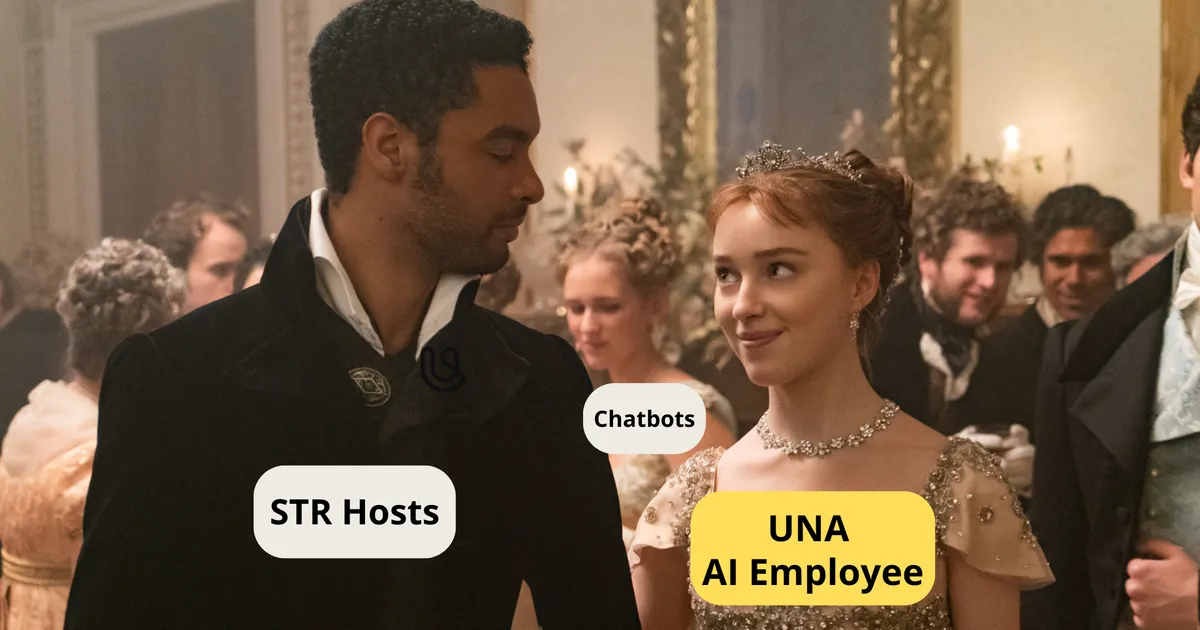
If you manage short-term rentals, you have probably heard that AI can automate your business. So you try a chatbot. It answers guest messages, writes polite responses, and communicates quickly and consistently. For a moment, it feels like the solution.
Then you realize something important: You are still the one running everything!
You are still coordinating cleaners, checking calendars, confirming early check-ins, resolving last-minute issues, and overseeing multiple listings across platforms. The quality of communication has improved, but the operational burden remains largely unchanged.
This is where many hosts encounter the same realization: most AI tools available in the market today are chatbots. And chatbots are built for conversation, not operations.
Why AI Is Often Mistaken for a Chatbot
The global AI conversation is dominated by conversational systems such as ChatGPT, Claude, Gemini, and similar large language models. These tools are designed to generate text, respond to prompts, and simulate intelligent dialogue. They are powerful, accessible, and widely discussed.
Because of this visibility, AI is often equated with chat-based interaction. When hosts hear “AI for Airbnb” or “AI for short-term rentals,” they naturally assume it refers to automated guest messaging.
However, managing short-term rentals is not primarily a communication challenge. It is an operational challenge that involves multiple interconnected systems working simultaneously.
Hosts are not searching for large language models. They are searching for Airbnb automation software, vacation rental management tools, and solutions that reduce manual coordination. They want to prevent overbookings, streamline cleaning schedules, manage multiple listings efficiently, and scale without increasing stress.
The core objective is not better replies. It is fewer operational tasks.
The Structural Limits of Chatbots
Chatbots are reactive systems. They process incoming messages and generate responses. When integrated with booking platforms, they can automate standard communication flows and improve response time with template answers, which can somehow positively affect platform metrics.
However, their core function remains communication.
Short-term rental operations extend far beyond messaging. A single guest request often triggers multiple operational consequences. An early check-in affects cleaning schedules and availability windows. A last-minute booking impacts task coordination and calendar synchronization. A payment delay influences communication timing and access instructions.
These elements are interconnected. True automation must operate across these layers simultaneously.
Chatbots typically do not manage these operational dependencies. They enhance communication within a conversation, but they do not function as an integrated operational layer across systems.
As a result, messaging improves, yet workload remains.
Una: From Conversation to Operational Execution
Una was built with a fundamentally different approach. Instead of centering on chat-based interaction, Una acts as an AI operational layer embedded within short-term rental infrastructure.
It connects booking platforms, calendars, and management systems into structured workflows. Communication is aligned with operational logic rather than handled in isolation.
When events occur within the rental ecosystem, they trigger coordinated processes that align messaging, scheduling, and task management. The objective is not simply to respond more efficiently, but to reduce the number of manual decisions required from the host.
This is the distinction between a chatbot and an AI operator.
- A chatbot operates within a conversation.
- Una operates within a system as a real human employee.
LLM-Agnostic and Built for Scale
Many AI tools are tightly coupled with a single large language model provider. Their functionality and limitations are directly tied to that one system.
Una is designed to be LLM-agnostic. It functions as an operational intelligence layer capable of leveraging different language models depending on the task and context. This architectural flexibility supports scalability and resilience in a rapidly evolving AI environment.
For hosts and property managers, this means automation is not dependent on a single AI engine. It becomes part of a broader operational infrastructure that can evolve over time.
The goal is not to experiment with AI features. The goal is to build a stable, efficient system that supports growth.
The Shift from AI Assistants to AI Operators
The first wave of AI adoption in hospitality focused on automated replies and conversational assistance. It demonstrated that AI could enhance communication.
The next stage focuses on operational autonomy.
It represents a shift from AI assistants that help complete tasks to AI operators that reduce the total number of tasks that require manual intervention.
For hosts managing multiple listings, operational consistency becomes critical. For property managers scaling their portfolios, inefficiencies multiply quickly without structured automation. Sustainable growth requires systems that coordinate processes, not just generate text.
Reducing communication time is beneficial.
Reducing operational complexity is transformative.
Una Play: Operational Simulation in Practice
Una Play extends this operational framework by enabling hosts to simulate and refine AI-driven workflows in a controlled environment. Rather than evaluating only the tone of a message, hosts can assess how entire operational sequences behave before they affect real bookings.
This approach reflects a broader understanding of AI in short-term rental management: intelligence applied to workflows, not just to words.
Rethinking Airbnb Automation
When hosts search for Airbnb automation software or guest communication automation, they are ultimately seeking relief from manual coordination and repetitive decision-making.
- Chatbots improve communication performance.
- Operational AI reduces structural workload.
Where chatbots live inside chat interfaces, Una functions within the rental infrastructure itself, aligning messaging, scheduling, and task execution into coherent workflows.
Short-term rental professionals do not simply need conversational intelligence. They need operational intelligence.
That is what Una was built to provide!
Curious how Una works in real operations?
Talk to our human sales team, see where Una is already working, and hear feedback from real use cases. Book a quick call here.