The Bedroom Is Not the Destination: Why Polydom and Explorabout Are Betting on Local Experiences
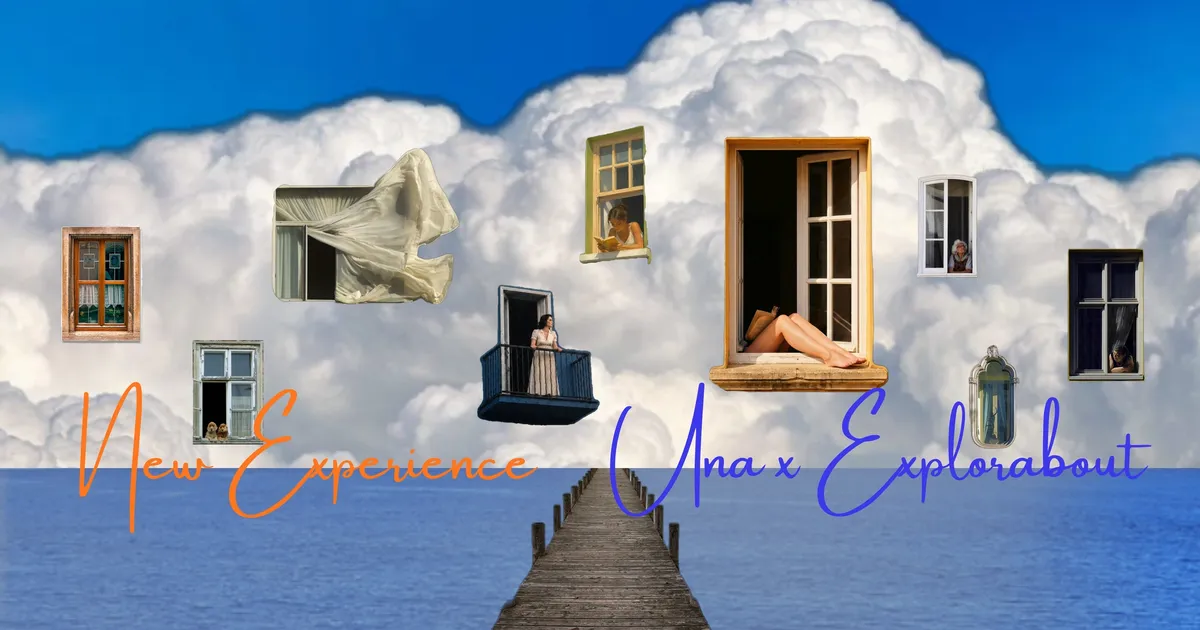
Travel has always been about experience. What is changing now is the scale of the opportunity: guest demand is growing, technology is making discovery and booking easier, and property managers have a chance to play a much more strategic role in what happens beyond the stay.
There is a simple truth about travel that is easy to forget amid constant discussions of occupancy, ADR, design, technology and operations:
People do not travel because they need somewhere to sleep.
A beautiful bedroom matters. A comfortable bed matters. Good design matters. Flawless operations certainly matter.
But years later, the story a guest tells is rarely about the mattress.
It is about the little restaurant they almost missed. The boat trip at sunset. The horseback ride. The local chef who came to the house. The waterfall they would never have found on their own.
It is about what happened around the accommodation.
That belief is one of the reasons the new partnership between Una by Polydom and Explorabout felt natural long before it became official.
And interestingly, the broader travel industry now appears to be moving rapidly in the same direction.
Travel has always been an experience business. Now the numbers — and technology — are accelerating it.
This is not a new idea. Travel has always been about what people experience: the places they discover, the people they meet, the food they taste, the stories they bring home. What is changing now is the scale of the opportunity. Demand for in-destination experiences is growing, and new technology is making those experiences easier to discover, compare and book.
The numbers are becoming difficult to ignore.
Phocuswright and Arival estimate that global travel experiences reached approximately $271 billion in 2025 and are projected to exceed $340 billion by 2029. Experiences grew 17% in 2024, compared with 6% for the broader travel industry. Yet the sector remains surprisingly under-digitized: only about one-third of experiences were booked online in 2025.
That combination is important.
Demand is growing. Supply exists. But discovery, distribution and booking are still fragmented.
Large travel companies are clearly paying attention.
In August, Tripadvisor Group and Airbnb announced a partnership that will make a selection of Tripadvisor Group tours, activities and attractions bookable through Airbnb. Tripadvisor Group says its experience inventory spans more than 425,000 activities worldwide.
Only weeks earlier, Viator became Google's first connected app specifically for travel experiences. Travelers using Gemini can now discover and compare more than 425,000 Viator experiences conversationally, refine options through follow-up questions and then continue to Viator to complete the booking.
That development is particularly relevant to Polydom.
Because two trends are converging at exactly the same time: travelers increasingly value experiences, while AI is changing how those experiences are discovered.
Tripadvisor itself has described AI as compressing what used to be a fragmented travel-planning process into a conversational flow. The company has been expanding its presence across AI environments including Claude and Alexa+, with the goal of moving travelers more naturally from questions to recommendations and, ultimately, action.
The question for vacation rental operators is therefore no longer simply:
Should property managers recommend local things to do?
The more interesting question is:
What role should the property manager play in this experience economy?
Explorabout and Polydom approached the same problem from two different directions
Karen Piscitelli, Founder and CEO of Explorabout, and Lana Udalov, Founder and CEO of Polydom, first connected through Female Founders in Hospitality, a community created to support women building businesses in travel and hospitality.
It quickly became clear that Explorabout and Polydom had been looking at essentially the same guest journey — but from opposite ends.
Explorabout approached the problem through the experience itself.
Explorabout was born from her own vacation rental in North Carolina's Blue Ridge Mountains. Looking through her guest book, she noticed something revealing: guests enjoyed the property, but again and again they wrote about the things they had done — apple picking, horseback riding, waterfalls and other local discoveries.
The house enabled the trip.
The experiences became the memories.
That observation eventually became the philosophy behind Explorabout:
The better the experience, the bigger the memory.
Today Explorabout works to curate local tours, activities and services and make them accessible through the property manager's own guest relationship rather than simply sending travelers off to search the internet themselves.
Polydom was approaching the same issue from another direction.
Polydom built Una as an AI digital employee for hospitality.
Una can communicate with guests, answer questions, support reservations, coordinate requests and help hospitality teams operate around the clock.
And the more Polydom worked inside real hospitality operations, the more obvious something became.
Guest communication is not only a service function.
Sometimes, it is a commercial opportunity.
Consider the difference between these questions:
Where do I park?
What time is checkout?
Can I have another towel?
What should we do tomorrow?
The first three primarily create operational work.
The fourth can create an experience, additional revenue and a stronger relationship with the guest.
But only if someone is there at the exact moment the guest asks.
The 8:45 p.m. problem
Imagine a family sitting in their vacation rental at 8:45 at night.
Tomorrow is their last full day.
Someone asks:
“What should we do?”
Traditionally, several things can happen.
They search Google. They open an OTA. They scroll through social media. They message the property manager and receive an answer the following morning. Or they simply give up.
In almost every case, the property manager — the company that already earned the guest's trust and is hosting the stay — disappears from that part of the journey.
That disconnect has never made much sense from a hospitality perspective.
The property manager already knows the destination.
They often already know the best local businesses.
They have the guest relationship.
Why should that relationship end at the front door of the property?
Explorabout brings the local layer. Una brings the conversational layer.
This is where the two businesses fit together.
Explorabout does the difficult local work: identifying, curating and connecting travelers with relevant experiences and trusted operators.
Una provides the always-available conversational interface.
A guest can ask.
Una can understand what they are looking for.
The available experiences can be surfaced in context.
Questions can be answered.
And the guest can move toward booking without waiting for the property management office to reopen.
When a request needs a person, it can still be escalated to a person.
That last point matters enormously.
The goal is not to automate local hospitality out of existence.
The goal is to automate the parts of hospitality that prevent people from practicing it.
AI should give hospitality its people back
There is an understandable concern that technology will make hospitality impersonal.
The greater risk may be the opposite.
Today highly capable hospitality professionals spend enormous amounts of their working day repeating information that already exists somewhere:
Wi-Fi passwords.
Check-in instructions.
Parking information.
Directions.
Policies.
Basic reservation questions.
Routine requests.
Every hour spent repeating those answers is an hour that cannot be spent talking to a guest, developing relationships with local businesses, understanding a neighborhood, resolving an unusual situation or creating the kind of service that a guest actually remembers.
That is not the best use of human talent.
The purpose of automation should not be to make hospitality less human. It should be to stop humans spending so much of their time behaving like machines.
When technology absorbs routine availability, communication and coordination, the management company gets something extremely valuable back:
capacity.
And capacity creates options.
A company can serve guests across more hours without increasing headcount at the same rate.
Teams can spend more time on higher-value interactions.
Operators can expand the service they provide without having to build a traditional concierge desk from scratch.
And local knowledge can become an asset instead of something trapped inside the head of one busy employee.
That creates a business opportunity for property managers
There is another part of this conversation that hospitality should not be embarrassed to discuss:
revenue.
Guests spend money after they arrive.
They eat. They explore. They book boats, tours, chefs, photographers, attractions, classes, fishing trips, transportation and countless other services.
Historically, much of that spend has bypassed the accommodation provider completely.
Yet the property manager often created the trust that made the trip possible in the first place.
Explorabout changes that equation by allowing participating property managers to offer curated experiences and participate in commission generated by bookings. Una adds the conversational and after-hours service layer that can make those experiences easier for guests to discover.
That does not mean every property management company should suddenly become a tour operator.
Quite the opposite.
The opportunity is to become a better connector.
Property managers do not need to manufacture every experience themselves.
They need to know what is worth recommending, make it easy for the guest to access it and remain part of the relationship.
Locals have always been one of vacation rentals’ greatest advantages. The next step is to make it strategic.
Locals have always been one of the strongest advantages of vacation rentals. A guest chooses a home in a neighborhood, a beach town, a mountain community or a city not simply to sleep there, but to experience that place. The opportunity now is to treat that advantage strategically: to deliberately design the guest journey around local knowledge, trusted recommendations and experiences that feel relevant to that specific destination.
Accommodation itself is increasingly easy to compare.
Bedrooms can be compared.
Amenities can be filtered.
Rates can be sorted.
Photos can begin to look remarkably similar.
Even good design eventually becomes replicable.
Local knowledge is much harder to commoditize.
A management company that genuinely understands its destination can offer something a listing page alone cannot.
The best fishing captain for a family with two teenagers.
A photographer who knows the quiet beach at sunset.
The chef who will adapt a menu for a child's allergy.
The small winery tourists rarely find.
The activity that works when it rains.
That is not merely inventory.
That is hospitality.
And current traveler behavior suggests that the opportunity is becoming more valuable, not less. Tripadvisor's first-half 2026 booking data showed travelers increasingly choosing participatory, immersive activities and exploring beyond the most heavily visited destinations. Craft-class bookings, for example, rose 88% year over year, while experience bookings in destinations outside Tripadvisor's 100 most-booked locations grew more than twice as quickly as those in the top 100.
For vacation rentals, that is particularly relevant.
Vacation rentals' advantage is not in trying to look more like hotels. It is becoming even better at helping guests experience a place like someone who belongs there.
A partnership built around the same conviction
Explorabout and Polydom did not begin these conversations because Airbnb announced an experiences strategy, because Tripadvisor partnered with Airbnb or because Viator appeared inside Gemini.
The two companies were already talking about the problem.
Explorabout was built around the insight that great local experiences were too difficult for guests to discover and too difficult for local operators to distribute.
Polydom saw that property managers had guest trust and enormous hospitality knowledge, but their teams had neither unlimited time nor 24-hour availability to turn every guest question into an opportunity.
Those ideas fit.
Explorabout brings the curated experience ecosystem.
Una brings the AI digital employee that can help guests navigate it through conversation.
The property manager remains part of the relationship.
The local operator gains another route to the traveler.
And the guest gets something that technology alone can never manufacture:
a better trip.
That is the outcome that matters most.
Because a recommendation is useful.
A completed booking creates business value.
But the real measure of success is still the insight that first inspired Explorabout: “That was the best part of our trip.”
Tagged