You Bought Software to Save Time. Why Is Your Team Still Doing the Connecting?
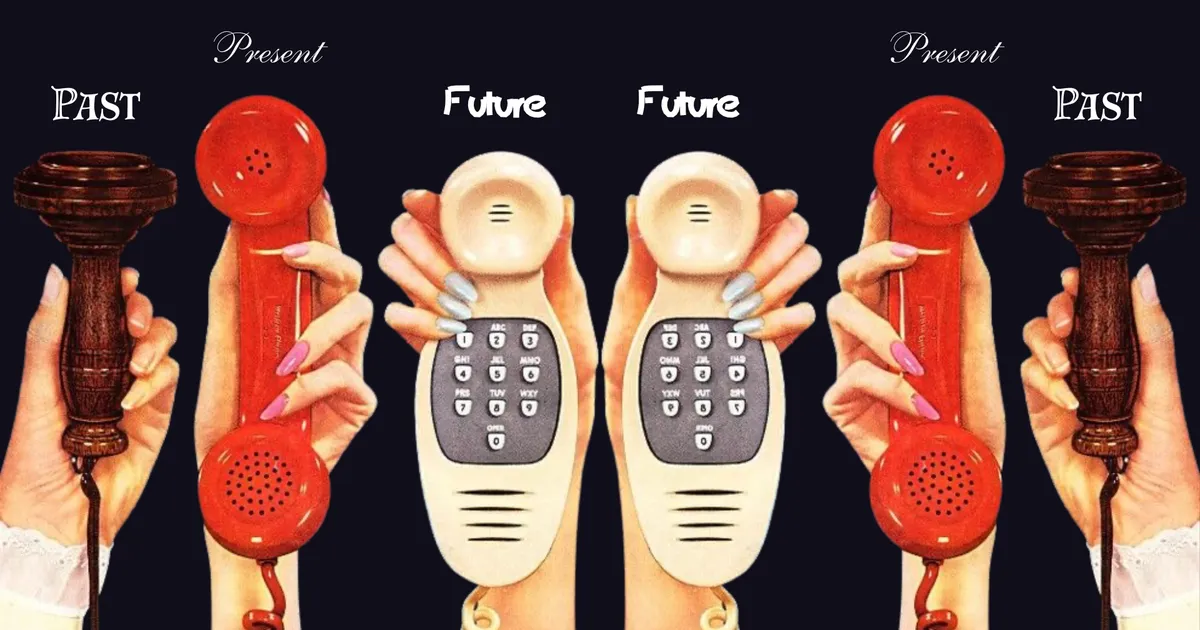
Ten years ago, you probably had a calculator, a camera, a watch, a map, a notebook, and a phone.
All separate.
Then the smartphone changed how we used them.
It didn't make every tool disappear. It brought their functions into one connected experience. Today, you can check the weather, get directions, pay for coffee, take a photograph, and send a message without thinking about which device comes next.
Hospitality technology hasn't reached that point yet.
Your hotel already has a property management system, a guest messaging platform, task management software, a phone system, OTA inboxes, payment tools, and internal communication channels.
Each serves a purpose.
Yet someone on your team still has to connect them.
A guest requests early check-in. An employee checks the PMS, reviews availability, replies on WhatsApp, updates reception, messages housekeeping, and hopes everyone receives the information.
The technology exists.
Your employees are still doing the work of connecting it.
And for independent hotels, serviced apartments, and professional vacation rental managers, that hidden coordination work becomes a serious obstacle to growth.
The next opportunity in hospitality AI isn't necessarily another system with more features.
It's reducing the manual effort required to turn a guest request into a completed action.
That's the idea behind Una by Polydom: a voice-first AI Digital Employee designed to support work across the hospitality systems an operator already uses.
Your Hotel Doesn't Have a Software Shortage. It Has a Coordination Problem.
Hospitality has spent years investing in specialized technology.
A PMS manages reservations and inventory.
A messaging platform handles guest conversations.
A task management system organizes housekeeping and maintenance work.
A payment platform processes transactions.
A CRM helps manage relationships and commercial opportunities.
These applications have made important parts of hotel operations more efficient.
But they haven't necessarily made the entire operation easier to manage.
That's because a guest request rarely fits neatly inside one system.
Someone asks to extend their stay.
The team needs to check availability and pricing, confirm the applicable policies, update the reservation if approved, communicate the new terms, and make sure the relevant employees know about the change.
Or a guest reports a maintenance issue.
Someone must understand the problem, identify the property, notify the appropriate team, and follow up through the established process.
The individual actions may be simple.
The work connecting them is not.
The Hidden Labor Between Applications
When software operates in separate environments, employees become the connection layer.
They copy information between systems.
They check whether an action was completed.
They explain the same context to another department.
They chase acknowledgments.
They remember which tasks are still waiting.
None of this necessarily appears as a line item in the operating budget.
But it consumes staff attention throughout the day.
For a business managing 50 or 150 units, this creates a scaling problem.
The portfolio may grow, but every additional property brings new reservations, guest conversations, operating rules, and exceptions.
If every request requires employees to coordinate the same sequence manually, workload continues growing with the business.
Adding software doesn't create operating leverage when people still have to move every request between the tools.
What Changes When AI Can Help Move the Work Forward?
Traditional software is designed around actions initiated by people.
An employee opens an application, looks up information, and performs a task.
A conversational assistant can make part of that process easier by answering questions or recommending next steps.
But the team may still need to perform the actual work.
Una approaches the problem differently.
She is designed to interpret supported guest requests using relevant hospitality context and help carry out authorized actions through connected systems.
Depending on the integration and configuration, that can include checking reservation information, assisting with eligible booking actions, coordinating service requests, or routing issues that require employee involvement.
The distinction is operational.
A guest doesn't necessarily need an explanation of how the hotel's systems work.
They need their request handled.
And the employee shouldn't have to perform five routine checks and updates every time the request crosses a system boundary.
This is what we mean by an AI Digital Employee.
Not software that replaces the hotel's existing technology.
Software designed to help execute work through it.
Of course, the analogy has limits. Una doesn't have unrestricted access to every application or authority to make every decision. Supported actions depend on the connected platforms, available information, permissions, and operating rules.
But within those boundaries, the opportunity is substantial: reduce the number of routine steps employees must personally coordinate.
One Group Arrival. Seven Small Tasks. One Busy Team.
Imagine a group organizer contacting a serviced apartment operator on Wednesday.
The group is arriving Friday.
Several apartments are already booked.
The organizer asks whether everyone can check in early.
A seemingly straightforward request now involves several questions.
Are the reservations confirmed?
Which apartments are assigned to the group?
Are any units occupied the previous night?
When are the current guests expected to depart?
Will housekeeping have enough time to prepare the apartments?
Does the property's policy allow early arrival?
Who must approve the final arrangement?
In a traditional workflow, an employee gathers the information, checks the constraints, contacts the relevant team, and replies to the organizer.
Then someone must make sure the information reaches everyone responsible for the arrival.
The request isn't unusually difficult.
But it creates several opportunities for information to be delayed, overlooked, or misunderstood.
Where Una Can Reduce the Work
With the appropriate integrations and configured procedures, Una can support the initial stages of this process.
She can receive the request, identify the relevant reservation context, check supported availability and booking conditions, and help communicate the applicable options.
If approval or housekeeping confirmation is required, the workflow should involve the appropriate employee rather than promise an outcome prematurely.
Once a decision has been made, supported communication and coordination steps can help keep the relevant information moving.
The precise actions vary by property and integration. This example illustrates a potential configured workflow, not a guarantee that Una independently verifies housekeeping readiness or authorizes early check-in at every property.
But it captures the business opportunity.
Instead of making an employee personally manage every routine step, the operation can delegate supported work while retaining human control over exceptions.
And the organizer gets a clearer response without needing to know how many systems were involved.
The Next Question Shouldn't Start the Process Over
Suppose the organizer then asks about parking, Wi-Fi, and key collection.
These are ordinary guest questions, but the answers may differ between properties.
With accurate property-specific information, Una can handle supported inquiries without requiring the team to repeatedly search for instructions.
If the organizer requests an invoice under a different company name, the situation may require additional review, depending on the billing system and the property's procedures.
Una can recognize the request and route it with the relevant context where configured.
The value isn't pretending every exception can be automated.
It's allowing the routine parts of the conversation to progress without occupying an employee unnecessarily.
When employees get involved, they should be making decisions—not reconstructing everything the guest already explained.
Why Another Dashboard Can Make the Problem Worse
There's a familiar pattern in hospitality technology adoption.
A property purchases software intended to reduce manual work.
The new platform introduces its own dashboard, notifications, inbox, settings, and reporting environment.
Employees now have another place to check.
The application may perform its specific function well, yet the operating process has become more complicated.
This is why adoption should be part of the business case for AI.
An operator doesn't benefit much from automating a task if employees must constantly supervise another disconnected interface to ensure that the task gets done.
Una is designed to work with existing hospitality systems and supported communication channels.
That can include PMS platforms, telephone infrastructure, guest messaging, and operational task workflows.
The objective is to reduce the need for employees to move between these environments for repeatable work.
It does not mean every tool is consolidated into one universal application.
Nor does it mean every integration supports identical actions.
Operators should assess which processes remain inside their existing systems, where Una can act, and which steps still need human involvement.
The buying question is practical:
Does the proposed AI workflow remove work from your employees' day, or does it give them another system to manage?
Connected Tools Are Useful. Completed Work Is More Valuable.
A software integration is often presented as an achievement in itself.
The PMS connects to the messaging platform.
The task system connects to the PMS.
The payment processor connects to the booking engine.
Those connections matter.
But a connected system doesn't automatically produce a completed guest request.
Consider a maintenance issue.
An AI agent may create a ticket through a supported integration.
That is a useful step.
But ticket creation doesn't mean someone has repaired the problem.
The task may still need assignment, acknowledgment, scheduling, and physical completion.
Similarly, generating a booking link doesn't mean a reservation has been confirmed.
And sending a payment request doesn't mean payment has been received.
These distinctions matter because hospitality operations involve real-world consequences.
A guest cares whether the room is ready, the issue is resolved, or the reservation is secure.
The operator therefore needs visibility into what has been requested, what has been completed in the connected system, and what still requires follow-up.
Una can support authorized actions and coordination where the necessary integrations are available.
But the business should define what counts as successful completion and how unfinished work is handled.
The goal isn't simply to connect more applications. It's to reduce the distance between a guest's request and the right operational outcome.
Your Team Should Handle the Exceptions, Not Every Step
Hospitality will always require people.
A distressed guest needs judgment and empathy.
A VIP relationship may call for personal attention.
A complex group booking can involve commercial negotiation.
An unusual refund request requires the appropriate authority.
And a physical maintenance issue still needs someone capable of resolving it.
These are not failures of automation.
They are situations where human participation is valuable.
The problem arises when employees spend so much time on routine coordination that they have less capacity for those higher-value interactions.
Una is intended to help change that balance.
By handling eligible communication and supported workflow steps, she can reduce the repetitive administrative work surrounding guest service.
Employees remain responsible for policies, approvals, exceptions, and decisions outside the automation's authority.
This is a different way to think about productivity.
The goal isn't simply fewer conversations handled by people.
It's more useful work accomplished with the team's existing capacity.
For an independent hotel, that might mean allowing reception staff to focus on guests in front of them while routine telephone inquiries receive assistance.
For a professional STR manager, it might mean reducing the daily effort spent checking property information and coordinating standard requests.
For a serviced apartment operator, it might mean making after-hours support more consistent without expecting the team to personally answer every routine question.
The specific benefit should be measured against the work the business actually delegates.
The Real Test: Can Your Team Stop Doing the Same Work Twice?
Before introducing an AI Digital Employee, identify a process that repeatedly interrupts your employees.
Don't begin by asking how many channels or integrations a vendor supports.
Take one real request and trace the work behind it.
For example, when a guest asks to extend a stay:
- Who checks the reservation?
- Who verifies availability?
- Who confirms the permitted rate and conditions?
- Who updates the booking when an action is authorized?
- Who informs the guest?
- Who checks whether another team needs to know?
Now examine which steps your existing software already supports and which still depend on manual coordination.
That distinction reveals the most useful automation opportunities.
A strong vendor demonstration should show the actual workflow—not merely a convincing conversation about it.
If a booking is modified, verify the result in the PMS.
If a task is created, confirm it appears in the appropriate system.
If an issue needs human attention, inspect the information passed to the employee.
And if an action isn't supported, make sure the AI explains or escalates the limitation rather than suggesting that the work is already complete.
This is how operators can evaluate whether AI is providing operating capacity rather than another layer of software.
A Digital Employee Should Work for Your Operation, Not the Other Way Around
There's another important decision behind the choice of an AI employee: how that employee relates to your existing technology providers.
PMS-native AI can be an excellent fit when most of the business operates within one platform.
An independent AI layer may be more relevant when the operator manages multiple systems, communication channels, or property types.
But neither approach automatically guarantees greater flexibility, portability, or control.
Operators should ask which data remains accessible, how conversation history can be exported, which integrations are supported, and what happens if the business changes its PMS.
These are important commercial considerations because hospitality software decisions tend to have long-term consequences.
For a deeper discussion of that distinction, read Whose Agent Is It? The Hidden Cost of PMS-Native AI.
The point isn't that every hotel needs to replace native automation with a separate platform.
It's that the AI should fit the business's operating model rather than force the business to adapt every process around one vendor.
The Next Hospitality Advantage Isn't More Software. It's More Capacity.
Return to the smartphone.
Its value wasn't simply that it offered more functions than a calculator, a camera, or a paper map.
It reduced the effort required to move between them.
Hospitality is approaching a similar opportunity.
Operators already have powerful systems for reservations, payments, communication, and service delivery.
But many of those systems still depend on employees to connect the work.
The opportunity for AI is to reduce that manual coordination.
To use relevant information from connected tools.
To perform authorized routine actions.
To keep the appropriate people informed.
And to recognize when a decision genuinely belongs to a human employee.
Una by Polydom is built around that idea.
Not another dashboard employees must remember to open.
Not an unrestricted system that promises to run every part of the hotel autonomously.
A Digital Employee designed to support useful work within the operation that already exists.
Because the objective isn't to own more technology.
It's to give your existing team more operating capacity without making them carry more complexity.
See How Una Could Work Inside Your Existing Systems
If your hotel or vacation rental business already has the right software but your team is still spending hours coordinating routine requests, start with one real workflow.
Show us where employees switch between systems, repeat information, or manually follow up on actions that should be easier to complete.
Our team can review which steps Una supports through your existing integrations, which require configuration, and where employees should remain involved.
Book a quick call with our human sales team to explore how Una could reduce manual coordination in your operation.
Tagged